

Trusted Herbal Supplement Brands 2026
Table of Contents
- What Makes a Trusted Herbal Supplement Brand
- How to Choose Herbal Supplements That Match Your Needs
- Third-Party Tested Herbal Supplements: What Verification Actually Means
- Herbal Supplement Label Guide: What to Read Before You Buy
- Herbal Supplement Interactions With Medications: Safety Essentials
- Top Herbal Supplement Brands and What Sets Them Apart
- Frequently Asked Questions
Last Updated: October 12, 2026
What Makes a Trusted Herbal Supplement Brand
A trusted herbal supplement brand prioritizes transparency, quality verification, and honest communication about what its products can and cannot do. At Andina Natural, we've built our reputation on these principles.
Trust starts with sourcing. Brands that work directly with farmers and document herb origins build credibility, soil-to-shelf traceability catches quality issues before they reach customers.
Third-party testing is another cornerstone.
Reputation follows: customer reviews, pharmacist recommendations, and industry recognition signal earned trust.
How to Choose Herbal Supplements That Match Your Needs
Choosing the right herbal supplement starts with clarity about what you're trying to address, digestive discomfort, blood sugar levels, heart health, or another wellness goal.
Next, match the supplement's documented use to your situation.
Consider your current medications and health conditions.
Look at serving size and dosage. Six capsules daily is a different commitment than two, you're more likely to stick with a routine that fits your lifestyle.
Finally, if you're new to herbal wellness, start with one supplement at a time.
Third-Party Tested Herbal Supplements: What Verification Actually Means
"Third-party tested" is one of the most repeated and least examined phrases in the supplement aisle. Here's what it verifies, what it doesn't, and how to check a specific bottle.
The Three Tests That Matter
A legitimate third-party panel confirms three things:
- Identity, that the material in the capsule is the species listed on the label, typically via high-performance thin-layer chromatography (HPTLC) or DNA barcoding. Identity testing catches adulteration, common in expensive herbs like ginseng, saw palmetto, and St. John's Wort.
- Purity, screening for heavy metals (lead, arsenic, cadmium, mercury), pesticide residues, microbial contamination, and residual solvents. Limits are set by USP monographs and California Proposition 65 thresholds.
- Potency, measuring whether the labeled active compounds are present at the stated amount. For a standardized extract, this means verifying the percentage of the marker compound; for a whole-herb powder, confirming the herb is present at the labeled weight.
Certification vs. Testing: A Distinction Most Articles Skip
These are not the same thing, and conflating them creates a false impression of rigor.
- Testing means a lab ran an assay on a sample. It says nothing about who the lab was, whether it was accredited, or whether the results were favorable.
- Certification means a program reviewed the testing and manufacturing process against a published standard. The main programs are NSF Certified for Sport, USP Verified, and ConsumerLab.com's approved-products list. NSF Certified for Sport screens for athletic-banned substances; USP Verified confirms the product meets USP monographs for identity, strength, purity, and dissolution; ConsumerLab tests products it purchases independently and publishes pass/fail results.
A brand can truthfully say "third-party tested" while using an unaccredited lab and never disclosing results. Certification closes that gap, but only for the specific products reviewed, not the brand's entire catalog.
How to Verify a Specific Product
Brand-wide quality claims are unreliable because quality varies by product and lot. Here's the product-level process:
- Find the lot number. It's printed on the bottom or side of the bottle, usually near the expiration date.
- Request the COA for that lot. Ask customer service directly. A COA should list the lot number, the testing lab, the methods used, and the results against specification.
- Check the lab's accreditation. Look for ISO/IEC 17025 accreditation, the international standard for testing labs (NIST Quality System | NIST). An unaccredited lab's results carry far less weight.
- Match the COA to your bottle. If the lot number on the COA doesn't match your bottle, the certificate is irrelevant to what you're holding.
- Look for the marker compound result. A potency result should state the measured amount of a specific compound, for example, "withanolides: 4.8%", not just "pass."
What Testing Cannot Tell You
Even a perfect COA has limits:
- It verifies the tested lot, not every lot the brand will ever produce.
- It confirms the product contains what the label says, not that the herb will work for your specific health goal.
- It does not evaluate interactions with your medications or your individual physiology.
- It does not assess whether the dose is clinically meaningful. A product can pass identity, purity, and potency testing while delivering a dose far below what any study used.
Where to Find Batch Results
- Brand websites, the best brands publish a COA lookup by lot number. If the page exists but only shows one sample certificate, that's a signal.
- ConsumerLab.com, independently purchases and tests products, publishes results behind a subscription.
- NSF and USP product databases, searchable lists of certified products, updated as certifications are added and removed.
- FDA warning letter and recall databases, public records of enforcement actions, useful for spotting brands with unresolved quality problems.
According to the National Institutes of Health Office of Dietary Supplement Programs, dietary supplements are regulated as a category of food rather than as drugs, which means products reach the market without pre-market approval for safety or effectiveness. That regulatory structure is exactly why product-level verification, not brand-level reputation, is the reliable path for consumers.
Herbal Supplement Label Guide: What to Read Before You Buy
Reading a supplement label correctly changes how you evaluate products. Most people scan for the ingredient name and stop. That's a mistake.
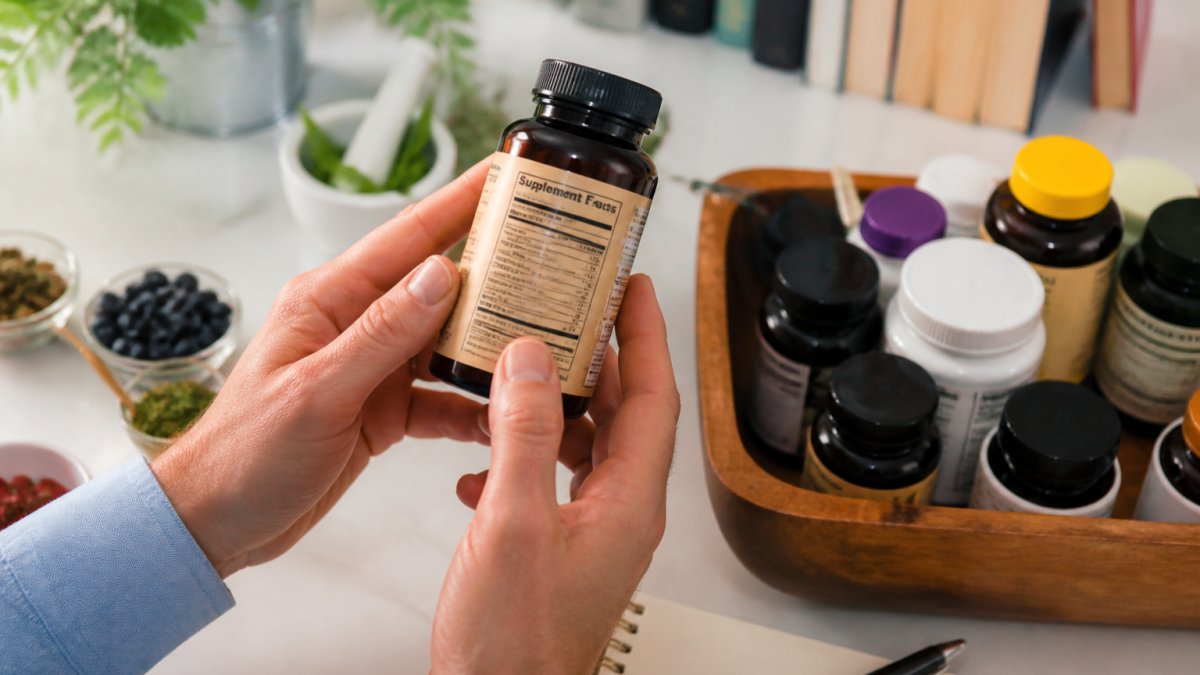
Start with the supplement facts panel: serving size, servings per container, and active ingredient per serving.
Next, check the "other ingredients" section for fillers, binders, and additives.
Check for standardized extract information.
Look for allergen warnings and contraindication statements.
Finally, verify the manufacturer's name and contact information.
Herbal Supplement Interactions With Medications: Safety Essentials
This is where many people make critical mistakes.
Some interactions are well-documented: St.
Many people don't mention supplements to their doctors because they assume "natural" means "safe to combine with anything", an assumption that has landed people in emergency rooms.
If you're managing a chronic condition like high blood pressure or prediabetes, this conversation is non-negotiable.
For those without significant medication interactions, herbal supplements are generally well-tolerated, but "generally" isn't good enough for your health. Get specific guidance for your situation.
Top Herbal Supplement Brands and What Sets Them Apart
Most "best brand" lists ask you to trust the author's opinion. This one shows its work: below is the scoring framework used to evaluate herbal supplement brands for 2026, plus how to apply it to any brand, including the one you're reading about.
How Brands Were Scored
Each brand is evaluated across six weighted criteria. The weights reflect how much each factor affects whether a product is what the label says, not how popular or well-marketed the brand is.
| Criterion | Weight | What Earns a High Score |
|---|---|---|
| Third-party testing access | 25% | Batch-specific certificates of analysis (COAs) published or available on request; testing by ISO 17025-accredited labs |
| Ingredient sourcing & traceability | 20% | Named suppliers or farms, country/region of origin disclosed, identity testing at intake |
| Label accuracy & dose transparency | 20% | Standardized extract percentages stated, extract ratio disclosed, serving size matches studied doses |
| Regulatory & recall history | 15% | No unresolved FDA warning letters, no Class I or II recalls in the past five years |
| Evidence honesty | 10% | Claims match the strength of published research; structure/function language used correctly |
| Customer support quality | 10% | Staff can answer questions about interactions, contraindications, and COAs |
Why These Weights
Testing access carries the most weight because it's the single factor a reader can independently verify: a brand can claim anything about sourcing, but a COA from an accredited lab is a document you can request and read. Sourcing and labeling follow because they determine whether the product matches the label. Regulatory history is weighted lower because most mainstream brands have clean records, it's a disqualifier, not a differentiator. Evidence honesty and support quality predict how a brand behaves when a customer asks a hard question.
How to Apply This Framework Yourself
You don't need to accept anyone's ranking. Run any brand through the same six criteria:
- Request a COA. Email customer service and ask for the certificate of analysis for the specific lot number printed on your bottle. A brand that can't produce one within a few business days loses the heaviest-weighted category.
- Check the FDA warning letter and recall databases. Both are public. Search the brand name. An unresolved warning letter is a hard stop.
- Read the Supplement Facts panel against published research. If a study used 300 mg of a standardized extract and the product delivers 50 mg of a whole-herb powder, the doses aren't comparable.
- Call support with a real question. Ask whether the product interacts with a specific medication. Vague or evasive answers are informative.
- Look for the extract ratio. "10:1" means ten parts raw herb were used to make one part extract, it says nothing about active compound content unless standardization is also stated.
What Sets Trusted Brands Apart
Across the brands that score well on this framework, the same patterns appear:
- They publish COAs by lot number, not just a single sample certificate from years ago.
- They name their extract standardization, for example, "standardized to 5% withanolides" rather than "ashwagandha root extract."
- They use structure/function claims ("supports immune health") rather than disease claims ("treats colds"), keeping them compliant with FDA labeling rules.
- They disclose the country of origin for each herb, which matters because heavy-metal and pesticide contamination risk varies by region and farming practice.
- They answer interaction questions rather than deflecting to "consult your doctor" as the only response.
Brands that score poorly share the opposite traits: no accessible COAs, vague sourcing language like "premium imported herbs," proprietary blends that hide individual doses, and marketing that implies disease treatment.
Where Andina Natural Fits
Andina Natural publishes lot-specific COAs on request, discloses extract standardization on every herbal product label, and staffs a support team trained to discuss interactions and contraindications. Its range targets specific wellness categories, digestive support, heart health, blood sugar support, and men's and women's formulas, rather than generic blends, and free shipping on orders over $50 supports the consistency herbal regimens require. Apply the six criteria above to Andina Natural the same way you would to any other brand; the framework only has value if you use it uniformly.
Frequently Asked Questions
What makes an herbal supplement brand trustworthy?
A trustworthy herbal supplement brand demonstrates transparency through third-party testing, clear ingredient sourcing, good manufacturing practices (GMP) certification, and honest labeling. Look for brands that publish their testing results, disclose where herbs are sourced, and avoid making unsubstantiated health claims. Reputation matters too, check customer reviews and whether the brand has been flagged by regulatory agencies for safety issues. Brands committed to quality also typically provide batch-specific certificates of analysis and maintain traceability from soil to shelf.
How can I check the quality of an herbal supplement before buying?
Start by reading the label carefully for standardized extracts, active compound percentages, and serving size. Verify third-party testing through organizations like NSF International or USP (United States Pharmacopeia). Many reputable brands publish their certificates of analysis on their websites or provide them upon request. Check the ingredient list for fillers or additives, and confirm the brand follows good manufacturing practices. Research the specific herbs, look for evidence supporting their effectiveness and any known side effects or interactions. Consumer reviews can reveal real-world experiences, but focus on detailed reviews that mention specific results or issues.
Can herbal supplements interact with prescription medications?
Yes, herbal supplements can interact with prescription medications in ways that reduce effectiveness or increase side effects. For example, St. John's Wort reduces the effectiveness of certain antidepressants and blood thinners, while ginkgo can increase bleeding risk if combined with anticoagulants. Garlic supplements may interact with blood pressure medications, and high-dose vitamin E can potentiate blood thinners. Always discuss any herbal supplement you're considering with your doctor or pharmacist before starting, especially if you take medications for chronic conditions like high blood pressure, diabetes, or heart disease. This is critical for anyone managing multiple health conditions.
Are herbal supplements regulated by the FDA?
Herbal supplements are regulated by the FDA as dietary supplements, not as drugs. This means they don't require FDA approval before sale, but manufacturers must ensure products are safe and labels are truthful. The FDA can take action against unsafe products or false claims after they reach the market. Unlike prescription drugs, supplements don't undergo the same rigorous pre-market testing. This is why third-party testing and good manufacturing practices matter, they provide an additional layer of quality assurance beyond baseline regulatory requirements. Choose brands that voluntarily exceed minimum standards.